Last reviewed October 31, 2026.
The solar rep climbs down the ladder and says the panels can go on next month, but the shingles under them might not outlast the system. Now there are two big jobs on the table, two contractors, and a question of which comes first. Solar shingles promise to make it one job. On Long Island the more common answer is still a new roof first and panels right after.
Solar shingles, solar tiles and panels on racks
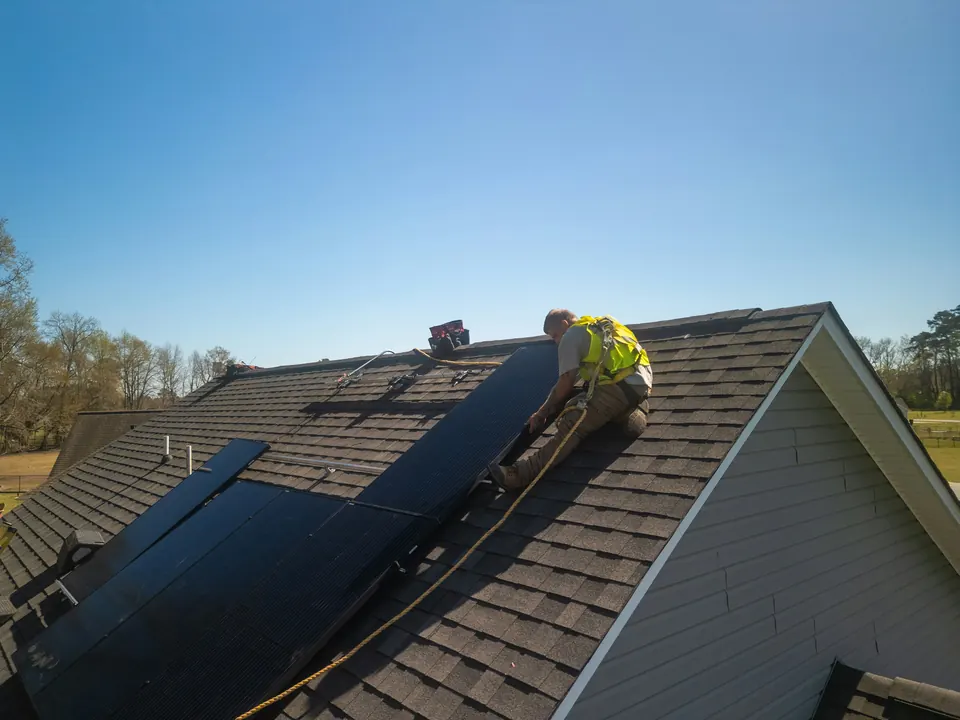
Ordinary panels sit on rails bolted through the shingles. A solar shingle is the roof covering itself, with the cells built in, laid in courses next to regular shingles.
| Product | What the maker or the record says |
|---|---|
| GAF Timberline Solar ES 2 | 57 watts per shingle, a nailable solar shingle whose units interlock with each other and can be laid alongside traditional GAF shingles, certified to UL 7103 as both a roofing and a solar product, rated for 130 mph winds (pv magazine, Feb 2025) |
| Earlier GAF Timberline Solar | About 2,100 TLS-1 shingles and jumper modules recalled in July 2023 for a fire hazard, after one fire and five thermal incidents. GAF Energy said it would replace the jumper modules and inspect and repair the shingles free (CPSC) |
| CertainTeed Solstice Shingle | Still listed by CertainTeed, which says it fastens to the roof sheathing with deck screws, blends in with asphalt shingles and is rated for 110 mph winds |
| Tesla Solar Roof | Electrek reported on August 20, 2026 that Tesla told certified installers the tiles can no longer be ordered. Tesla had not confirmed it on the record |
The recalled GAF units were sold from November 2021 through April 2023, so if your solar roof went on in that window, ask the installer whether yours was one of them. We found no Long Island roofer or solar company publishing a price for solar shingles, so any per-square-foot figure you find online is national, not local.
The roof goes first
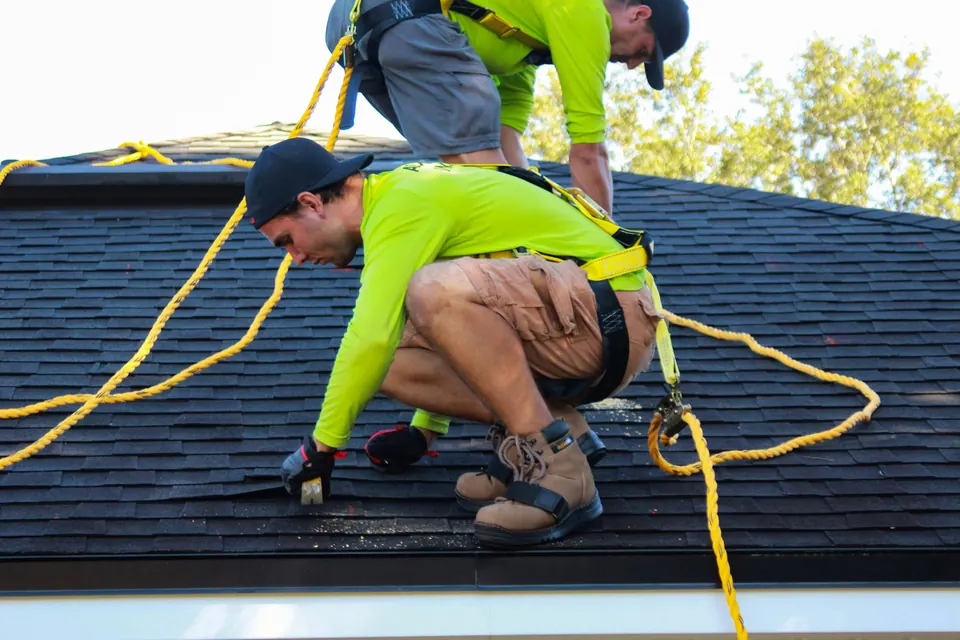
Panels that go onto a tired roof have to come off again when it fails. Gina Farese, whose Marcor companies service solar roofs across Long Island, told Newsday in April 2026 that much of their work traces to poor installations, including systems put on roofs they never should have gone on. Her estimate for uninstalling a system, redoing the roof and reinstalling it was $20,000 to $30,000.
That is the number to weigh against an aging roof. If the solar company says your shingles have only a few good years left, get a roofer’s opinion before signing for panels, and see our guide to how long a roof lasts.
What happens to the shingle warranty
Shingle makers are starting to write warranties for roofs that will carry panels. Owens Corning’s Platinum Solar PROtect, for its shingles bought after August 1, 2026, comes with strings attached:
- The whole roof has to be installed by an Owens Corning Platinum Preferred Solar PRO contractor, and the solar system has to go on within 60 days of the roof.
- The panel mounts have to be ones listed in Owens Corning’s solar technical bulletin, and every slope with panels needs one of three named Owens Corning underlayments across the whole slope.
- For 25 years it covers installation errors, including at solar mounts and their flashing, and pays to take panels off and put them back, up to $10,000 over the life of the warranty.
- It excludes damage caused by the panels or their wiring, unapproved changes to the roof or the solar system, and any lost solar production.
Ask your roofer which program the shingle maker offers before the solar crew picks its mounts, not after.
How PSEG Long Island credits your power
PSEG Long Island runs net metering on behalf of the Long Island Power Authority, under LIPA’s own tariff. That tariff limits net metering on a house to a system of 25 kilowatts or less that is also no bigger than 110 percent of the last twelve months of your usage. A larger system gets the utility’s buy-back rate instead.
PSEG Long Island’s brochure lays out the rest. You apply and get approval, a technician installs a net meter, your contractor sends closeout papers, and PSEG issues a letter giving permission to operate. After that, each extra kilowatt-hour you send out earns one credit in an energy bank that pays down later bills. For systems installed after January 1, 2018, credits carry over through the year, and the brochure says that arrangement was scheduled to last 20 years from when you start net metering. You still get a monthly bill for the basic service charge, and on a time-of-use rate, peak and off-peak credits sit in separate banks that cannot be combined. The brochure dates from 2018, so confirm the current terms with PSEG Long Island.
Newer systems also carry a daily charge the 2018 brochure never mentions. LIPA’s Statement No. 5, effective January 1, 2026, applies a Customer Benefit Contribution to customers compensated under VDER Phase One NEM whose systems were installed after January 1, 2022. For residential solar it is $0.0372 per kilowatt of DC installed capacity per day, which works out to about $13.58 a year for each kilowatt of panels. Ask your installer to include it when they estimate your savings.
Outages work differently than some buyers expect. PSEG says that without a battery, your panels shut off in a power outage along with everyone else’s power, so crews are not hit by electricity flowing back into the lines.
Incentives after the federal credit ended
The federal credit stopped with 2025. The IRS says its residential clean energy credit cannot be claimed for anything placed in service after December 31, 2025. PSEG Long Island’s own battery page still says you may qualify for federal tax credits, so read sales material with that in mind.
New York’s credit is still on the books. The state tax department says the Solar Energy System Equipment Credit equals 25 percent of qualified solar equipment costs, capped at $5,000, for a system at your principal residence, and any unused amount carries over for up to five years. For batteries, PSEG Long Island offers a Residential Energy Storage Incentive on the storage part of a solar system, which requires a participating NY-Sun contractor. We could not confirm the current NY-Sun solar rebate for Long Island from NYSERDA’s own site, so ask any installer to show it in writing.
Permits are set town by town. Islip, for example, handles solar through the state’s Unified Solar Permit, and our Islip permit guide lists the fee.
When the solar company is gone
A reroof under existing panels gets harder when nobody is left to take them down. Newsday reported in April 2026 that systems whose installers or panel makers have left the market, closed or gone bankrupt make up a double-digit percentage of the roughly 100,000 systems in LIPA’s territory. EmPower Solar was winding down after the federal credit ended, and Marcor agreed to be a contact point for EmPower customers still under manufacturer warranty. SUNation told the paper it services about 13,000 systems.
Before you schedule a roof replacement under panels, find out who will remove and reinstall them, who carries the warranty on that work, and whether the panel maker’s warranty still stands.