Last reviewed October 31, 2026.
Cedar roofs tend to tell you their age one piece at a time. A shake curls at the corner, moss settles into the slope that never gets sun, a few pieces slide out of line above the gutter. Eventually a roofer says the roof is near the end, and the real decision starts: put cedar back on, or move to something that only looks like it.
Shakes or shingles
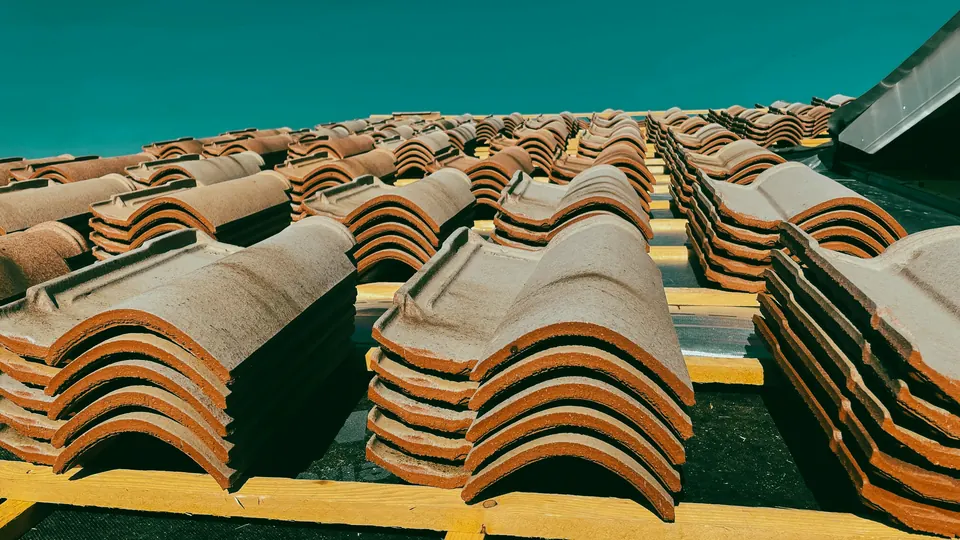
Both are cedar, cut two different ways. Home Team Construction in Mastic says shakes are split instead of sawn, which makes them thicker and textured enough to cast deep shadows. SkyLuxe Construction describes shingles as sawn on both sides, for a smooth, uniform face, and Rapid Roofing says shakes are often 3/4 inch or more thick at the butt. Home Team notes that on the East End you will find both styles within a block of each other.
The choice changes the installation too. The Cedar Shake and Shingle Bureau’s roof manual calls for a strip of roofing felt laid between every course of shakes, and says never to interlay shingles with felt.
Reading the grade on the bundle
The Bureau certifies cedar under its Certi-label program. For sawn shingles it publishes three roofing grades:
| Grade | Label color | What the Bureau allows |
|---|---|---|
| Number 1 | Blue | Clear heartwood, 100% edge grain, no defects |
| Number 2 | Red | Limited sapwood and flat grain |
| Number 3 | Black | Unlimited sapwood and flat grain |
All three are rated for roofs at a 3:12 pitch or steeper. A fourth grade, undercoursing, is meant for doubled sidewalls and is not a roofing product. Grade also sets how much of each shingle can show. On a 4:12 roof or steeper, the Bureau allows a Number 1 shingle 5, 5 1/2 or 7 1/2 inches of exposure for 16, 18 and 24 inch lengths, and less for the lower grades.
Benny’s Roofing says it specs premium blue label cedar to resist splitting and cupping, and Home Team says it puts only Number 1 on roofs. Ask to see the labels before the bundles are opened.
Cedar roof prices from Long Island companies
| Company | What it lists for cedar |
|---|---|
| Long Island Exterior Co., Apr 2026 | $12 to $18 per sq ft installed; $25,000 to $45,000 for an average home |
| Ready Roof, Bohemia, Sep 2026 | $12 to $20 per sq ft installed |
| Alec’s Construction, May 2026 | $700 to $1,200 per square (100 sq ft) |
Long Island Exterior Co. also tells homeowners east of Patchogue to add 20 to 40 percent to its western Suffolk prices, a figure it gives for roofing in general, not cedar alone. Benny’s Roofing says composite shakes cost about as much as real cedar installed on Long Island, and often more. For cedar next to asphalt, metal and slate in one table, see our roof replacement cost guide.
How long cedar holds up in salt air
| Source | Lifespan it publishes |
|---|---|
| Rapid Roofing, Oct 2026 | 18 to 40 years; often 20 to 30 on the coast with maintenance |
| Long Island Exterior Co. | 20 to 30 years |
| Ready Roof | 25 to 35 years, more upkeep near the water |
| Expressway Roofing, Manorville | 25 to 50 years if properly maintained |
| Benny’s Roofing | 30 to 40 years or more |
| Home Team Construction | 30 to 40 years for Number 1 western red cedar, longer for Alaskan yellow |
| SkyLuxe Construction | 50+ years in Suffolk County |
Rapid Roofing explains the low numbers. Salt settles on the wood and holds moisture against the grain, and it corrodes fasteners and flashing. Rapid estimates medium split shakes in coastal Suffolk at about 18 to 25 years, heavy or treated shakes at 25 to 35, and cedar shingles at 15 to 25.
Rapid ties the longer lifespans to regular care. It suggests a professional inspection every 2 years, yearly once the roof passes 15, moss and algae treatment every 3 to 5 years, and a preservative every 3 to 7. Benny’s and Home Team both stress keeping leaves and needles out of the valleys, and Home Team adds cutting back overhanging limbs. Washing cedar takes a much lighter touch than asphalt, which our roof cleaning page covers.
Spacing, airflow and the right nails
Benny’s puts it simply: cedar must dry from both sides. The Bureau’s manual spells out how.
- Gaps. Shakes go 3/8 to 5/8 inch apart and shingles 1/4 to 3/8 inch, with joints offset at least 1 1/2 inches from the course below.
- No sealed deck. The Bureau says not to cover the entire deck with a non-permeable barrier. In humid areas over solid sheathing it lists three options: preservative-treated cedar, vertical strips topped with horizontal furring, or a continuous ventilation mat. Home Team and Benny’s both describe a breathable mesh under the wood.
- Attic vents. The Bureau recommends soffit and ridge vents beneath a cedar roof. Our attic ventilation page covers how much a house needs.
- Fasteners. Two per piece. Within 15 miles of salt water, the Bureau requires Type 316 stainless steel. Farther inland, Type 304, Type 316 or hot-dipped galvanized meeting ASTM A153 Class D. Never electrogalvanized, and fire-treated or preservative-treated cedar always gets Type 316.
The Bureau also warns that a box marked “Number 316” is not the same as Type 316. Rapid Roofing lists hot-dipped galvanized as acceptable near the coast, but the Bureau’s rule is stricter, and Benny’s says stainless is the only correct choice near the water.
Fire ratings and treated cedar
The Bureau lists fire ratings only for its treated Certi-Guard products. Those shakes and shingles are pressure-impregnated with fire-retardant polymers and labeled Class B or Class C, and it says a Class A wood roof can be reached with a tested component system. Certi-Guard is only made from Premium or Number 1 shakes and Number 1 shingles. Certi-Last, the Bureau’s other treatment, is a preservative against decay, not a fire treatment.
The Bureau tells homeowners to confirm with local building and fire officials that a product meets local requirements. We did not find a Long Island town or New York State page that sets a fire class for a cedar roof on a house, so raise it with the building department when the permit is filed.
Composite shakes that copy the look
Benny’s Roofing names Brava, CeDUR and DaVinci as the molded polymer shakes it installs. Westlake Royal says DaVinci shakes are made of virgin resins with UV and thermal stabilizers and a fire retardant, rated Class A for fire and Class 4 for impact, with a lifetime limited material warranty on homes. Its page lists the wind rating as 110 mph in one place and up to 180 mph in another, so ask which test applies to your install. CeDUR lists a UL 790 Class A fire rating and a weight of 180 pounds per square. Real cedar shake, by Rapid Roofing’s count, runs 250 to 400 pounds per square.
Rapid says quality synthetic shakes typically carry 50-year limited warranties and last about 35 to 50 years, longer than natural wood. Westlake Royal pitches DaVinci as free of the ongoing maintenance natural shake needs. Going by Benny’s, though, a composite will not save money on the install.