Last reviewed October 31, 2026.
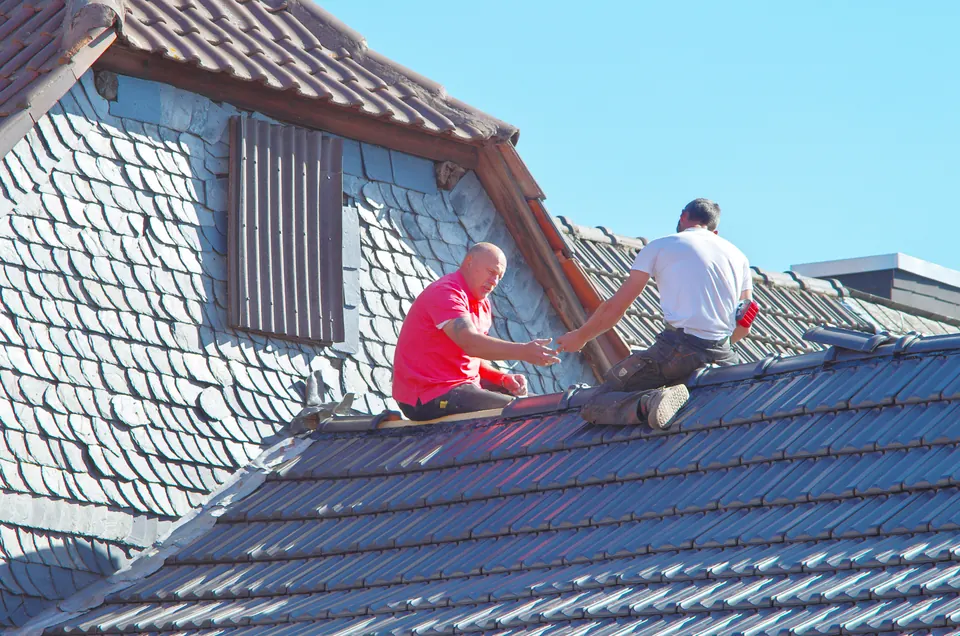
The roofer climbs down from a ranch in West Babylon, steps on a soft patch near the gutter line, and says some of the plywood will have to go. In the Town of Babylon, taking off plywood is what moves a roof job onto the permit list.
Babylon names roof replacement on its permit list
The town’s Building Department page answers “What projects require a Building Permit?” with a list that it says covers “the following projects (among others).” One line reads: “Roof replacement (removal of plywood).” The same list includes dormers, cathedral ceilings with architect plans, skylights, additions, porches and decks, and replacement windows and doors only when their size or location changes.
The town’s general rule is broader still. Its FAQ says “A building permit is required before starting any construction or alteration project on real property,” and that structures built without a permit are subject to fines.
| Roof work on a house in the town | What Babylon’s list says |
|---|---|
| Tear-off with plywood removed and replaced | Building permit required |
| New dormer | Building permit required |
| Skylight | Building permit required |
| Cathedral ceiling | Building permit required, architect plans required |
| New shingles over plywood that stays | Not listed either way, so call |
When a Babylon reroof keeps the plywood
The list ties the roofing permit to plywood removal and says nothing about a tear-off that stops at the felt and goes back down on the existing deck. We found no town document that exempts that job, and the “among others” wording leaves room for the town to want a filing anyway.
The trouble is that the plywood question often gets answered mid-job, once the old shingles are off and the crew can see rot. Settle it before work starts. Ask the roofer to put in writing how much decking the price assumes, then call the Building Division at 631-957-3058 with that scope and keep a note of who you spoke to and the date.
Applying through Babylon’s Online Permit Center
On January 26, 2026, the town announced that its Planning and Development Online Permit Center, run on OpenGov, would take applications starting February 2. The Building Department now says that, effective February 2026, all applications and supporting materials “must be submitted online.” The same pages carry a town alert: “Scammers are impersonating town officials and sending fraudulent invoices.”
The town’s two-page building permit application has to be signed and notarized. It asks for the owner, the applicant and the contractor, including the contractor’s license number, and it needs a notarized Property Owner’s Endorsement when someone other than the owner applies. The office checklist on the form includes a workers’ compensation and disability insurance certificate, an asbestos certificate, roof drains connected to dry wells and a final survey, applied as the job calls for them.
The Building Division is in the West Wing of Babylon Town Hall, 200 East Sunrise Highway, Lindenhurst, NY 11757, open Monday to Friday, 9 a.m. to 4:30 p.m., at 631-957-3058.
Suffolk County Consumer Affairs lists roofing among the trades its home improvement license covers, and our Suffolk license guide shows how to check one before you sign.
What Babylon charges and what it does not post
The Building Department page has no general fee schedule. The fees the town does publish come from its page on legalizing a structure built without a permit:
| Fee | Amount |
|---|---|
| Application fee | $25, nonrefundable, credited toward the permit fee |
| Building permit fee | Based on construction cost, set by the plans examiner or a building inspector and given at permit pickup |
| Certificate of occupancy | $20, plus $20 for each additional certificate |
The application form’s fee box follows the same pattern, with an application fee, a permit fee and a CO or letter of completion fee. Separately, Section 157-6 of the town code, amended in December 2023, charges $100 for construction costs of $10,000 and over and $50 under $10,000, paid at application, for the assessor’s tax statement attached to certificates for assessable residential structures. Ask whether that applies to your job.
We found no published figure for how long a Babylon permit stays valid, and the town’s pages do not list dollar fines for skipping one. Ask about both on the call.
Historic districts and illegal structures in Babylon
Chapter 137 of the town code says no one may make an exterior alteration to a landmark or a property in a historic district, including exterior elements visible from a public road, without a certificate of appropriateness recommended by the Planning Board and approved by the Town Board. The code has the Chief Building Inspector administer the certificate through a procedure coordinated with the building permit and certificate of occupancy process, and that inspector can issue a stop-work order when work strays from the certificate. A new roof in a different material or color on a landmark house should go through that review first.
The town treats a project done without a required permit as an illegally built structure. Legalizing it later means a notarized application, three signed and sealed surveys, two sets of floor plans and photos of the house, and the town notes that lenders and insurers usually want a certificate of occupancy when a house is sold or refinanced.
Amityville, Babylon village and Lindenhurst handle their own
Suffolk County lists three incorporated villages in the Town of Babylon: Amityville, Babylon and Lindenhurst. The Village of Babylon’s code, for one, names its own Building Inspector to enforce the state building code inside the village. Homes in any of the three start at village hall, even though Town Hall sits on Sunrise Highway in Lindenhurst. Hamlets such as West Babylon, North Babylon, Deer Park, Wyandanch and Copiague are not on the county’s village list, so they file with the town.
Across the line in Islip, the town’s written rule on roof covering reads differently, as our Islip guide explains.