“Flat” roofs are not quite flat. They are built with a slight pitch so water runs to a drain or the edge. When that pitch sags or a drain clogs, water sits, and that is where the trouble starts.
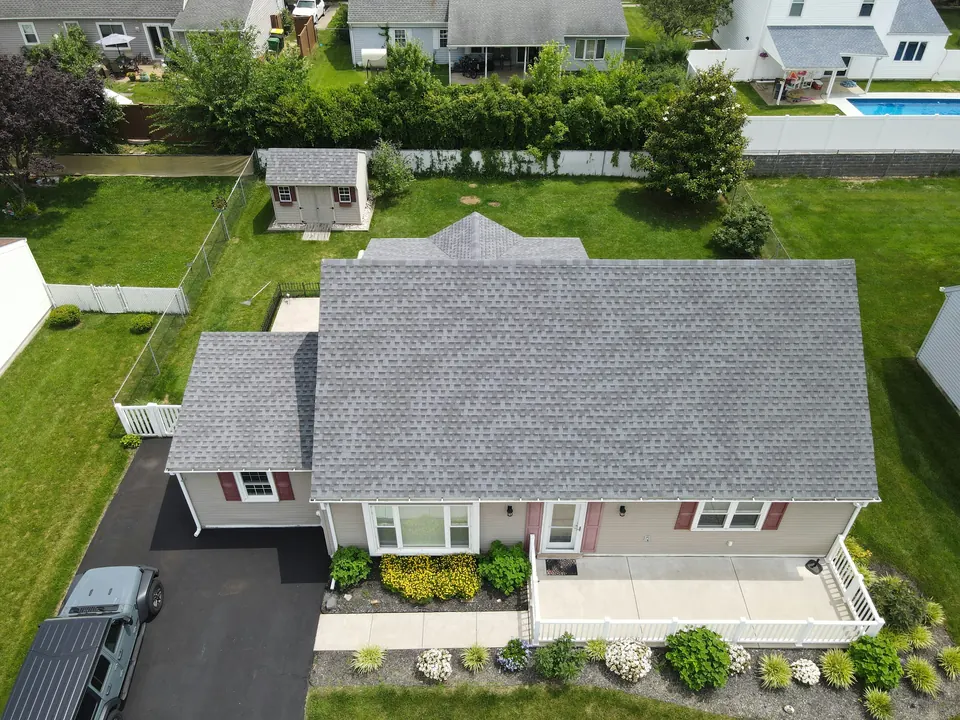
Long Island roofers mostly see them over garages, additions, extensions and ranch-style homes, according to Greene Group Construction and JAGG Roofing, plus multi-family and commercial buildings.
The membranes
| Membrane | Installed, per sq ft (County Roofing) | Lifespan (County Roofing) | Notes |
|---|---|---|---|
| TPO | $4 to $10 | 20 to 30 years | White, heat-welded seams. LI Roofing Co. calls it the dominant residential flat roof on Long Island |
| EPDM (rubber) | $4 to $8 | 25 to 30 years | Black rubber, glued seams, a long track record |
| PVC | $7 to $12 | 20 to 30 years | Heat-welded like TPO, usually the priciest |
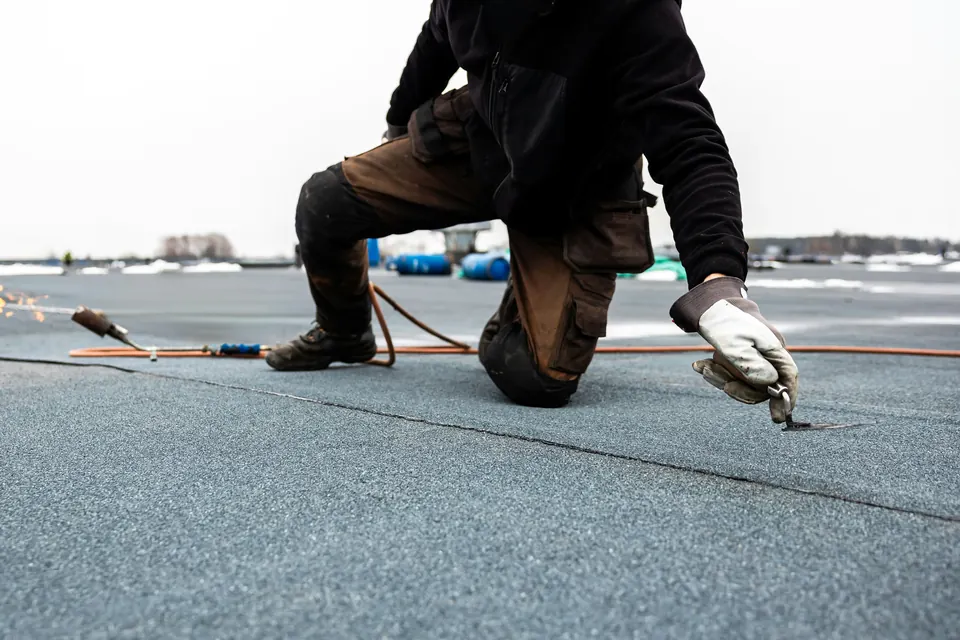
| Modified bitumen | $4 to $8 | 15 to 20 years | Often torch-applied, which County flags as a fire risk on a house |
Greene Group’s numbers run a little higher, $6 to $10 for TPO and $5 to $8 for EPDM.
What else goes on the bill
County Roofing lists the extras that separate a $6,000 job from a $15,000 one:
- tearing off the old roof, $1 to $5 per sq ft
- new insulation board, $1 to $4 per sq ft
- rotted deck repairs, $1,000 to $5,000
- labor at $40 to $80 an hour on Long Island
Ponding
If water is still sitting on the roof 48 hours after the rain stops, that is ponding. Greene Group calls it the number one killer of flat roofs. Standing water breaks down the membrane, finds every weak seam, and adds weight the deck was not built for. The fix is usually tapered insulation or rebuilding the pitch, not just a new membrane over the same low spot.
Seams and flashing
County Roofing calls seams the weakest point in any membrane system and says improperly welded seams can fail within months. Greene Group says the most common entry point is the flashing where the flat roof meets a wall, a skylight curb or a drain. If your flat roof leaks along the house wall, that is the first place to look.
Questions for the roofer
- Which membrane, what thickness, and how are the seams joined?
- Will the old roof come off, and will you fix the pitch if water is ponding?
- How will you flash it where it meets the house wall and any skylights?
- Is it torch-applied? If so, what fire precautions do you take?