Last reviewed October 31, 2026.
Every spring there is a new dark patch on the ceiling under the flat roof over the back extension, and every spring someone suggests painting the roof with something from a five-gallon pail. Sometimes that works. A coating is a liquid membrane rolled or sprayed over the roof you already have, and on the right roof it adds years. On the wrong one it hides water that keeps rotting the deck.
Where a coating fits on a house
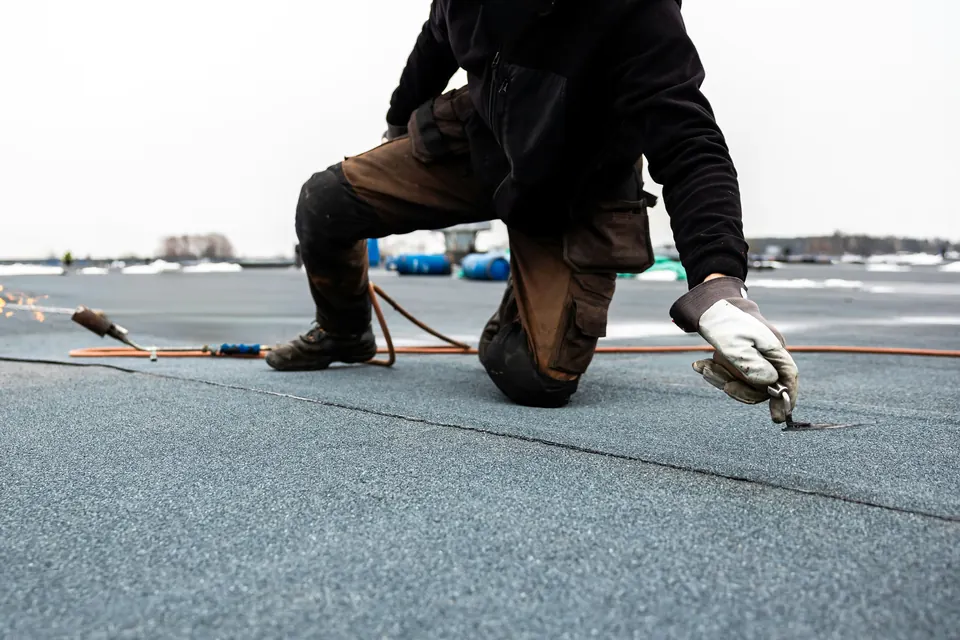
On a Long Island house that usually means the low-slope parts: the roof over an attached garage, a porch, a rear extension or a dormer, plus metal roofs on sheds, porches and some whole houses. The flat roof page covers the membranes these roofs are made of. A coating goes on top of one of them.
Manufacturers are specific about what their coatings can go over. Henry’s data sheet for its Pro-Grade 280 acrylic lists previously coated roofs, smooth built-up roofing, modified bitumen, aged EPDM rubber, PVC, metal, concrete and polyurethane foam. Henry’s guide for its 887 Tropi-Cool silicone adds TPO, and says the roof must be at least 90 days old. Neither is meant for asphalt shingles.
Silicone, acrylic and the word elastomeric
Henry sells its Pro-Grade 280 as an elastomeric white roof coating, and the same data sheet describes it as a water-based 100 percent acrylic latex with initial elongation listed above 250 percent. A pail marked elastomeric can hold an acrylic, so check the data sheet for what is actually inside.
| Acrylic (Henry Pro-Grade 280) | Silicone (Henry 887, GacoRoof) | |
|---|---|---|
| Standing water | Roof must drain. Henry asks to be called about ponding areas | Gaco says GacoRoof withstands permanent ponding water |
| Coats | Two coats of 1.5 gallons per 100 sq ft, applied crosswise | One coat of 1.5 gallons per 100 sq ft for Henry 887 |
| Weather to apply | No rain or temperatures under 50°F expected within 12 hours | Roof above 35°F and rising, no rain for 15 minutes after |
| Walking on it | Not for walking decks | Moderate foot traffic from roof maintenance only, and Henry warns it is extremely slippery |
Silicone handles water that sits; acrylic needs a roof that sheds it. If water stays standing on your extension roof after rain, that points to silicone, or better, to fixing the pitch.
What Long Island companies charge
County Roofing Systems in Melville puts roof coatings at $1 to $3 a square foot, which it calls far less than replacement, and recommends reapplying a reflective coating every 5 to 7 years to keep up UV protection (checked October 2026). We found no other Long Island company publishing a price for coating a house roof. Prices for coating a large commercial roof are on our commercial roofing page.
Get the coating’s brand and product name on the quote, along with how many gallons per 100 square feet the crew will apply and how many coats. Those two numbers decide how thick the finished coating is.
Thickness, weather and prep the makers require
Henry’s 2016 application guide for 887 calls for at least 1.5 gallons per 100 square feet, about 24 mils wet, drying to a minimum of 22 mils, evenly applied and free of pinholes. Henry’s acrylic calls for 3 gallons per 100 square feet in two coats and says a thicker dry film performs better and lasts longer.
Prep comes before any of it. Both Henry documents say the roof has to be clean and dry with leaks sealed first. For the silicone, Henry has the crew seal every pipe, skylight, curb and flashing with its silicone sealant, put down test patches on each kind of roof surface, and let them cure 72 hours before testing adhesion. The acrylic data sheet calls for washing with a detergent and a pressure washer over 2,000 psi. That is for a membrane or metal roof. Shingles are a different story, covered on our roof cleaning page.
Coating a metal roof
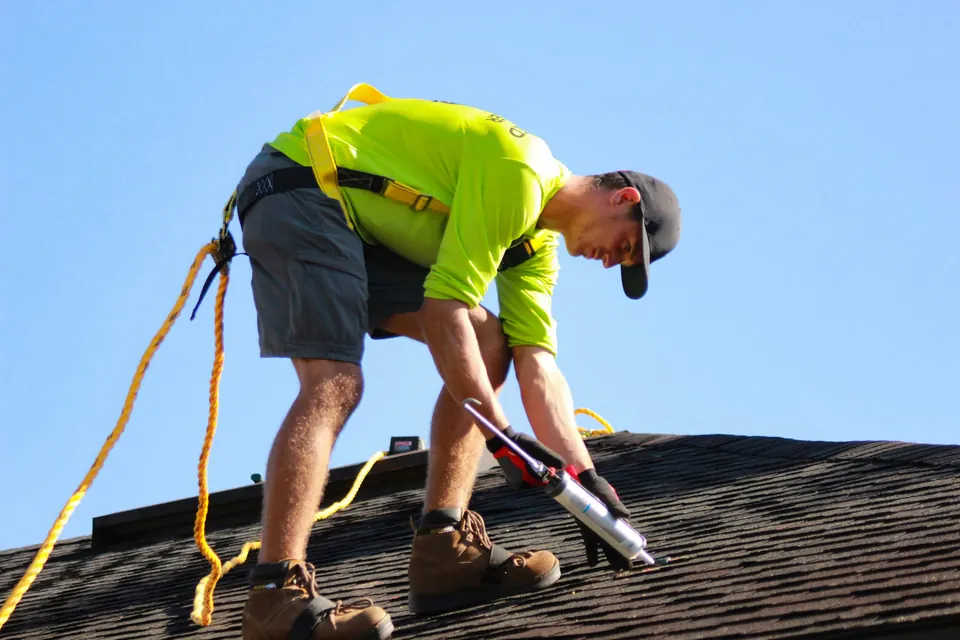
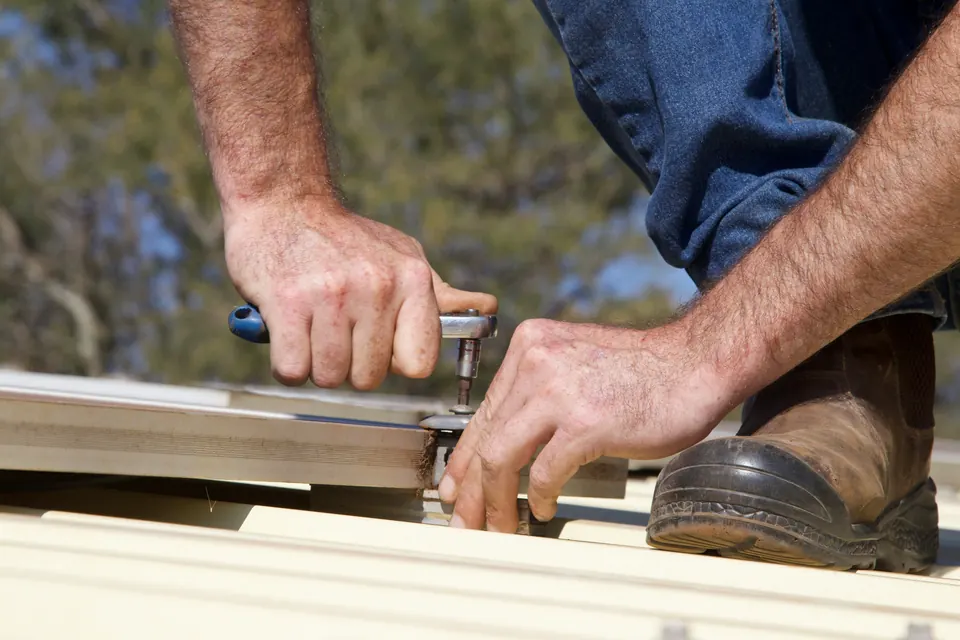
Rust and loose fasteners come first. Henry’s 887 guide calls for removing rust by wire brush, sandblasting or mechanical abrading until the metal is smooth and rust-free, and for sealing every exposed screw or fastener with a smooth 1/8 inch thick (125 mil) layer of Henry 884 or 885 silicone sealant so the fastener is completely encapsulated. The Pro-Grade 280 data sheet adds tightening or replacing fasteners on metal roofs as needed. Gaco says GacoRoof sticks to metal without a primer.
One exclusion is easy to miss. Henry’s Pro-Grade 280 is not for metal roofs with a factory Kynar or Hylar finish. If your metal roof is still under its paint warranty, ask the manufacturer before anyone coats it. Our metal roofing page covers the roofs themselves.
When a coating is the wrong fix
A coating seals the top of the roof. It does nothing for what is already underneath.
- A wet roof. Henry’s silicone guide says decks, insulation or roofing saturated with water must be replaced, and its acrylic data sheet says not to coat wet or saturated roofs.
- An old, brittle roof. Henry rules out roofs too dry and brittle to handle the shrinkage stress of a coating as it cures.
- Shingles, gravel and walking decks. Neither Henry product is for shingles or gravel-covered roofs, and the acrylic is not for decks people walk on.
- Standing water with an acrylic. Fix the pitch or use a coating made for ponding.
If the ceiling stain keeps spreading, start with a roof repair visit and find the leak before anyone sells you a coating.
Cool roof claims, checked against the data sheet
White coatings are sold on energy savings. Henry says its Pro-Grade 280 is designed to reflect sunlight and lower roof surface temperature, which helps lower indoor temperatures and energy costs, and the coating is rated by the Cool Roof Rating Council. Its own data sheet lists solar reflectance of 0.88 when new and 0.73 after three years, so the roof gets less reflective as it weathers. Henry gives no dollar figure for savings, and we found no official estimate for a Long Island house.
Read the warranty as closely as the energy claims. Henry’s limited product warranty on Pro-Grade 280 replaces coating proven defective within 12 years of purchase, and it covers the product only, not the labor to put it on.