Last reviewed October 31, 2026.
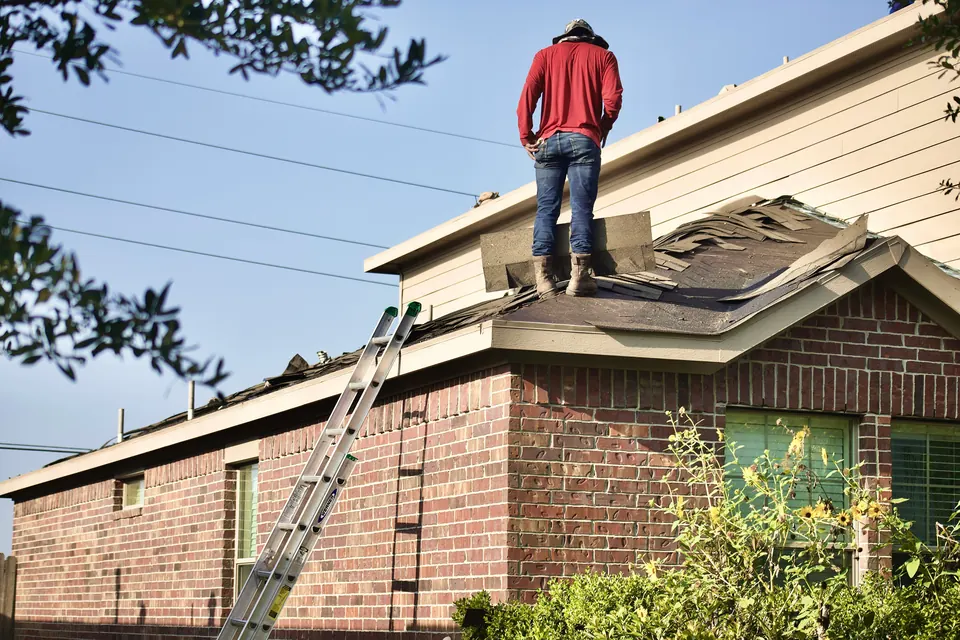
A roofer walks the house a few blocks off the boardwalk, finds soft decking over the porch and writes up a full tear-off. Before anyone orders shingles, the city has two questions: who is pulling the permit, and is this job big enough to wake up the flood rules. Long Beach answers the first plainly in its code. The second depends on what else is happening to the house.
Why every Long Beach reroof needs a permit
Long Beach is a city, so the Building Department in City Hall issues the permit and the city’s own Code of Ordinances writes the rules. Section 7-34 requires a permit before any structure is erected, altered, modified, improved, extended or demolished. Ordinary repairs get a pass. Then the code closes that door on roofs: those repairs “shall not be construed to include” the installation of siding or roofing.
The department’s web page says it again in its list of permit work, with the entry “To install or replace a new roof.” The city’s FAQ calls roofing one of the most commonly obtained permits.
One more line on that list catches people. A roll-off container or dumpster placed on the street needs its own permit. That matters on a narrow block where the tear-off dumpster cannot fit in the driveway.
What the Long Beach permit costs
Section 7-20, in the code supplement codified through April 7, 2026, sets one application fee for alterations, roofing, siding, fences and similar work: $175 for the first $1,000 of estimated cost, plus $18 for each additional $1,000 or any part of it. The code defines estimated cost as what good, safe construction would ordinarily cost, leaving out interior decoration. Run that formula on a job valued at $20,000 and the fee comes to $517.
Three more lines in Section 7-20 touch a roofing job:
| Rule | What Section 7-20 says |
|---|---|
| Paying at filing | Fees over $60 require half up front, at least $60, kept if the permit is denied |
| Work started early | The fee is two times the normal amount when work began before the permit |
| Capital improvement charge | A second fee equal to the first, but only for new buildings or multiple dwelling work over $25,000 |
Section 7-42 is blunt about refunds. Once a permit is granted, nothing comes back if the project is abandoned or the permit is revoked.
The department’s page says to call for current permit prices, so treat the code figures as the published baseline and confirm them by phone before you budget.
Who can pull a Long Beach permit
The Building Department says permits “can only be obtained by a City of Long Beach licensed contractor or a homeowner,” and a licensed contractor must sign an affidavit stating that they alone are doing the work.
The code’s own wording is stricter. Section 7-38 says construction or alteration permits go only to a licensed builder or mechanic. Section 7-19 lets the commissioner revoke a permit when the work is done by an unlicensed builder. If you plan to file as the owner without a roofer, ask the department how it squares those two rules first.
The city license stands on its own. Section 14-15 sets the license fee at $200 for a home improvement contractor and $265 for a general contractor, and Section 14-31 says a contractor license expires two years from the last day of the month it was issued. The city posts a list of licensed home improvement contractors for 2027 to 2028, with each license number and an expiration date of March 31.
Don’t stop at the name. Read the notes column too. Some entries limit the company’s scope, such as one marked not insured for dormers and extensions.
That list covers the city license and nothing else. For the county license and how to look one up, see our Nassau license guide. We found no published statement on whether the county license is also required for work inside the city, so it costs nothing to ask a roofer for both numbers.
How the flood rules reach a Long Beach roof
The city’s flood page says FEMA’s maps designated the entire City of Long Beach a flood zone as of September 11, 2009, and that the higher risk AE zone “encompasses virtually all of Long Beach.” Article XII of Chapter 7, the city’s flood hazard article, adopts those 2009 map panels plus a map revision that took effect April 5, 2023.
Section 7-227 makes it unlawful to undertake any development in a mapped flood hazard area without a floodplain development permit, and the article defines development as any man-made change to improved or unimproved real estate, buildings included. The Building Commissioner runs that permit as the local administrator.
The bigger trigger is substantial improvement. The article defines it as any reconstruction, rehabilitation, addition or other improvement costing at least 50 percent of the structure’s market value before the work starts. It also covers any house that has suffered substantial damage, meaning restoring it would cost at least half its pre-damage value, “regardless of the actual repair work performed.” The definition we read has no cumulative clause that adds up past permits.
Once a project crosses that line, Section 7-228 applies new construction standards. In AE zones the lowest floor, basement included, must sit at least two feet above the base flood elevation. In V zones the bottom of the lowest horizontal structural member must be at least three feet above it. The article never lists roofing as its own cost item. So when a new roof rides along with a renovation or a storm repair, ask the department how it will count the roof toward the 50 percent figure before anyone signs a contract.
The same flood program carries some good news. The city says it holds a Class 7 rating in FEMA’s Community Rating System, up from Class 8 after Sandy, which gives eligible Long Beach flood insurance policyholders a 15 percent discount.
Roof framing rules for oceanfront V zone houses
For new and substantially improved homes in V zones, Section 7-228(j) goes down to the rafters. It requires:
- Roof sheathing of plywood or other wood at least 15/32 inch thick and of exterior sheathing grade
- Galvanized or other corrosion resistant fasteners for both the sheathing and the roof covering
- Waterproof industrial adhesive on the plywood at corners, gable ends and roof overhangs longer than six inches
- A metal or wood connector at every other ceiling joist or rafter connection to the wall top plate
- 2-by-4 blocking on two-foot centers between rafters at each gable end, running at least eight feet in
- Eave overhangs no deeper than two feet unless an engineer or architect certifies a larger one
The same section asks that roofs be sloped as steeply as practicable and that ridges, hips, valleys, eaves, vents and chimneys get special care in fastening. Separately, Section 7-117 in the code’s boardwalk article bars the commissioner from approving plans for a building or extension abutting the Boardwalk that would look flat-roofed from the Boardwalk.
Permit deadlines, fines and the debris deposit
The clock starts on the permit date. Under Section 7-46, work must begin within 90 days and finish within one year, unless the commissioner grants longer up front. A late project is treated as abandoned. Each extension runs up to 90 days at a fee of 25 percent of the original permit fees, at least $75 and no more than $2,500.
Section 7-24 makes a violation of the building chapter punishable by a fine of up to $500, with a civil penalty of $1,000 for each day the violation continues on top of it. Each day counts as a separate offense.
The flood article carries its own penalty of up to $250, up to 15 days in jail, or both, with each day of noncompliance a separate offense, and a structure found noncompliant without a variance is reported to FEMA.
Section 7-39 calls for a $200 deposit or bond to guarantee debris removal on new construction or substantial alterations. The code does not say whether a straight reroof counts as a substantial alteration, so ask when you file.
Reaching the Long Beach Building Department
| Office | City Hall, Room 304 |
| Address | 1 West Chester Street, Long Beach, NY 11561 |
| Phone | 516-431-1005 |
| Fax | 516-431-1432 |
| [email protected] | |
| Questions about the code text | City Clerk, 516-431-1002 |
Permit or no permit, New York’s limit on how many roof layers a house can carry still applies, and our Brookhaven guide covers it. Addresses outside the city line answer to a town or village instead, and the Hempstead guide covers that town’s rules.